Where totality occurs
The umbral path reaches eastern Greenland, crosses western Iceland and enters northern Spain. A small part of northeast Portugal also lies close to the central path. Outside that narrow corridor, observers across much of Europe, northern North America and western Africa see a partial eclipse.
The Spanish section occurs late in the day. Local topography and the western horizon are decisive, so the geometric path alone is not enough when choosing an observing site.
Best planning regions
- Western Iceland for a higher Sun but a changeable maritime climate.
- Northern Spain for road access and generally lower summer cloud risk, balanced against a very low Sun.
- Greenland for expedition-scale viewing and a remote Arctic setting.
- Atlantic France for a deep partial eclipse with the Sun higher than in southeastern France.
What France and Europe see
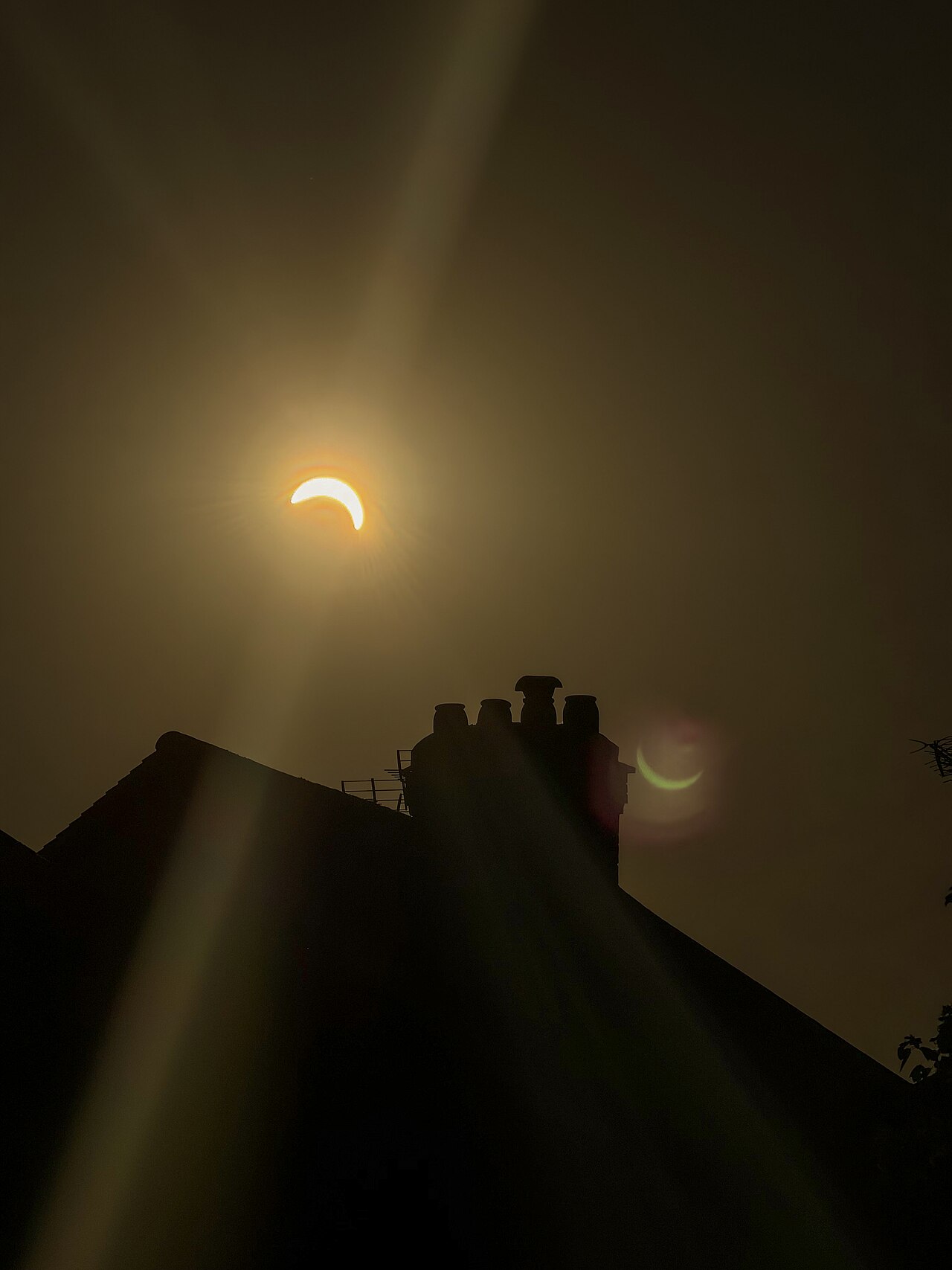
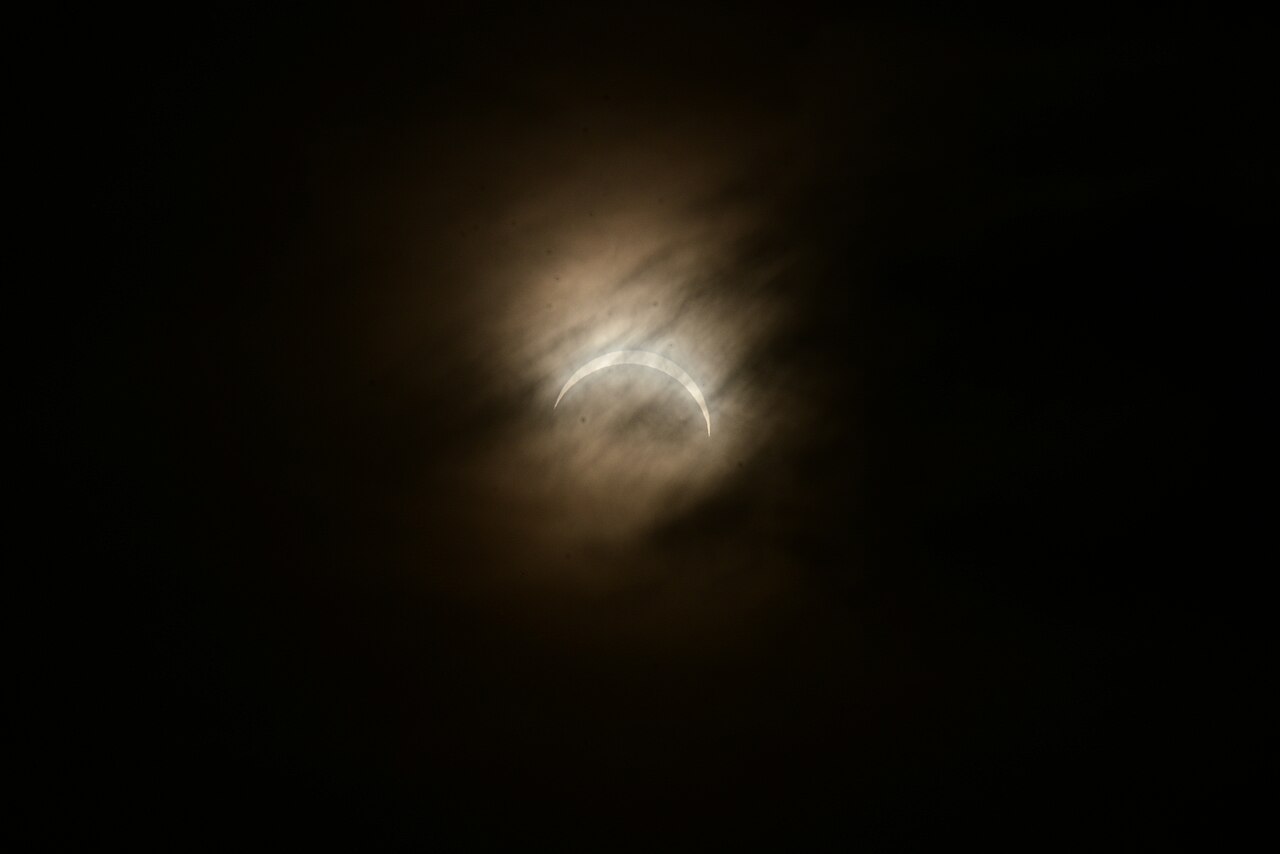
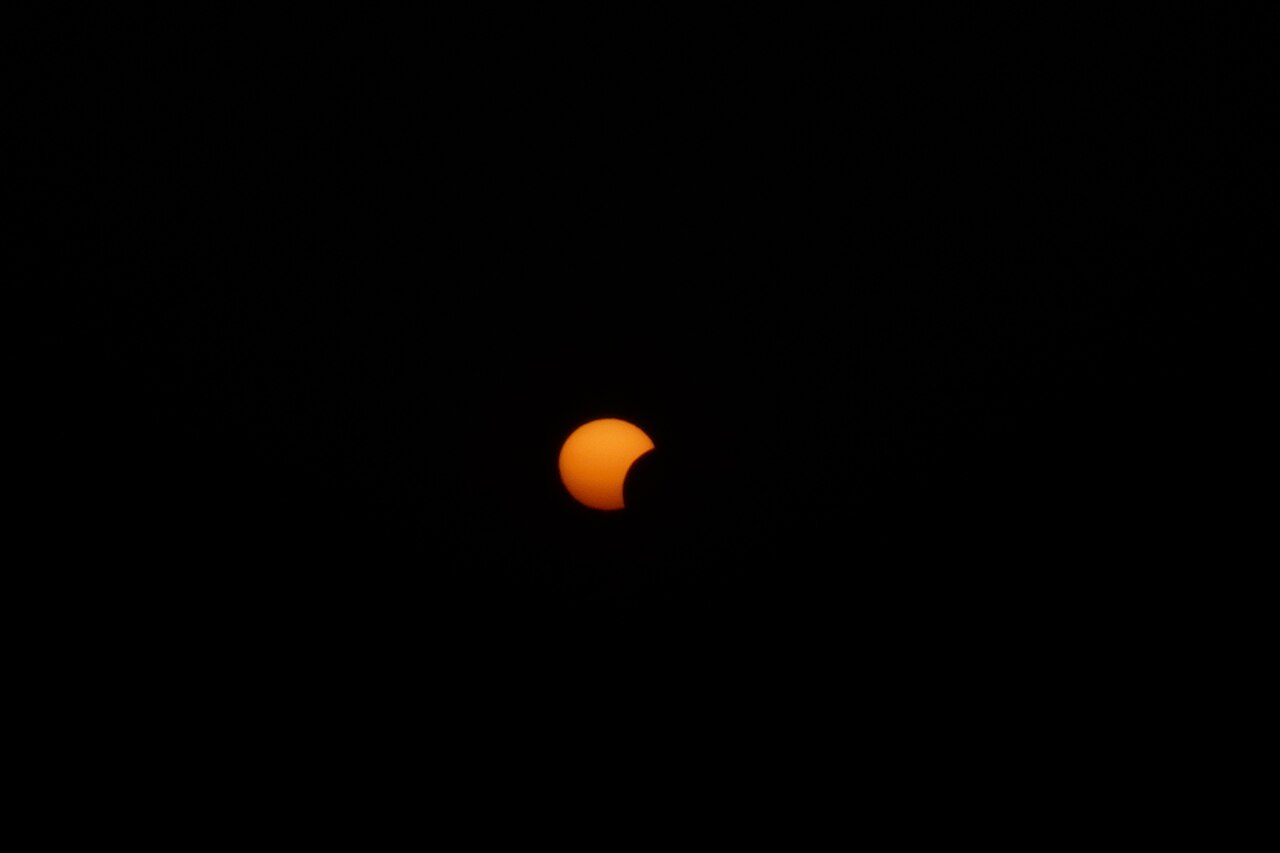
Most European countries experience a partial eclipse. In France, obscuration ranges from roughly 90% in the northeast to more than 97% in parts of the southwest. Paris reaches about 92% at 20:17 CEST.
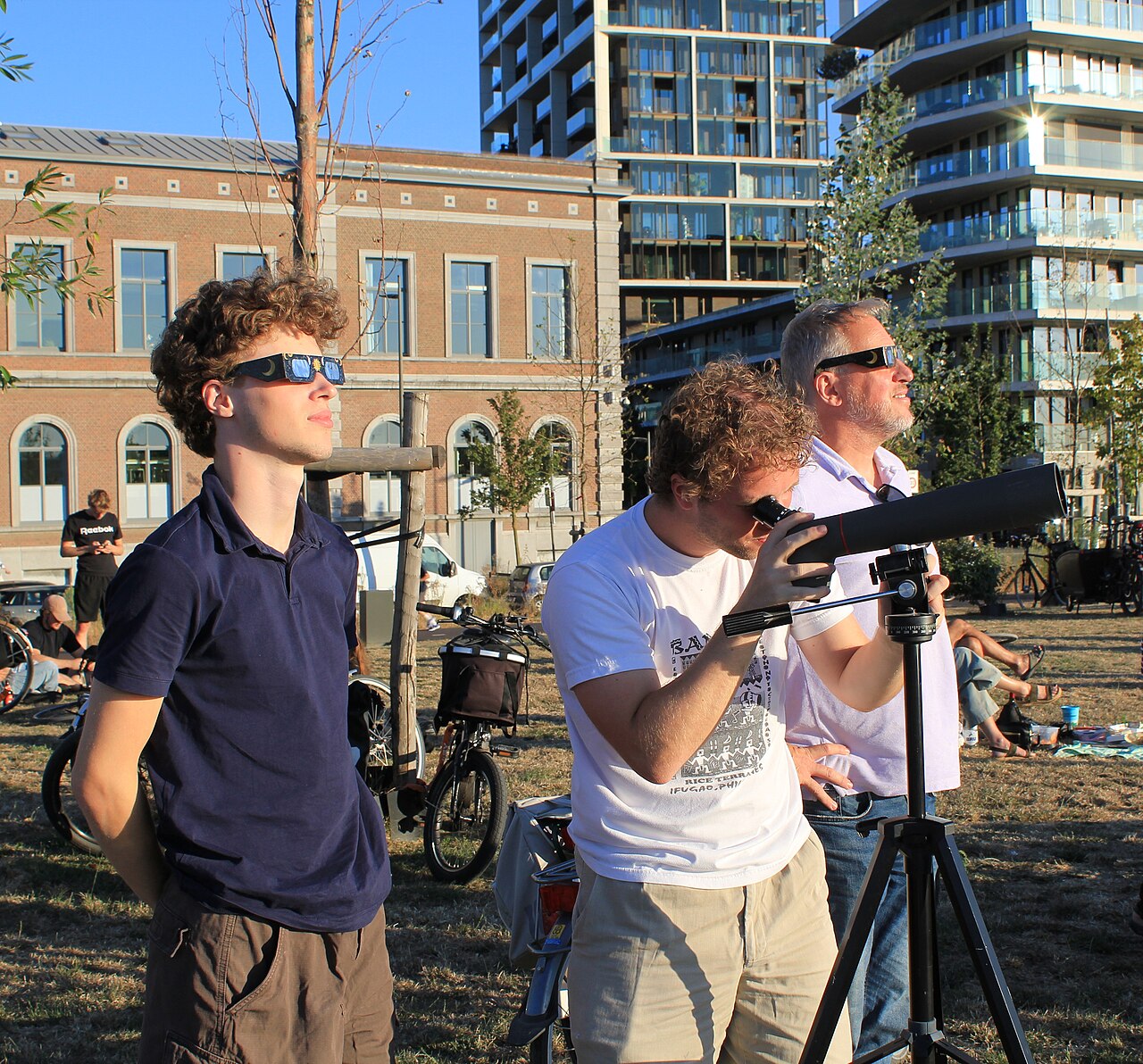
The partial phase remains dangerous to view directly. Outside the path of totality, certified eye protection stays on throughout.
Plan for a change of site
- Choose at least two backup sites linked by different roads.
- Monitor short-range forecasts across regions rather than one town.
- Confirm the Sun's altitude and azimuth for the exact coordinates.
- Arrive early and avoid relying on mobile data near crowded sites.
Sources and methodology
Dates, paths, safety and technical claims are checked against the references below. Gallery photographs are locally hosted, resized web copies from Wikimedia Commons; each caption links to its author, original file and Creative Commons licence.
- NASA GSFC: Besselian elements for 12 August 2026 ↗Greatest-eclipse time, Saros, magnitude, path geometry and maximum duration.
- ESA: 12 August 2026 global map ↗Independent visual check of total and partial visibility regions.
- IMCCE: Local circumstances ↗City-level contact times, obscuration and solar position.
- NASA: Eclipse eye safety ↗Protection required during partial phases and the limited totality exception.